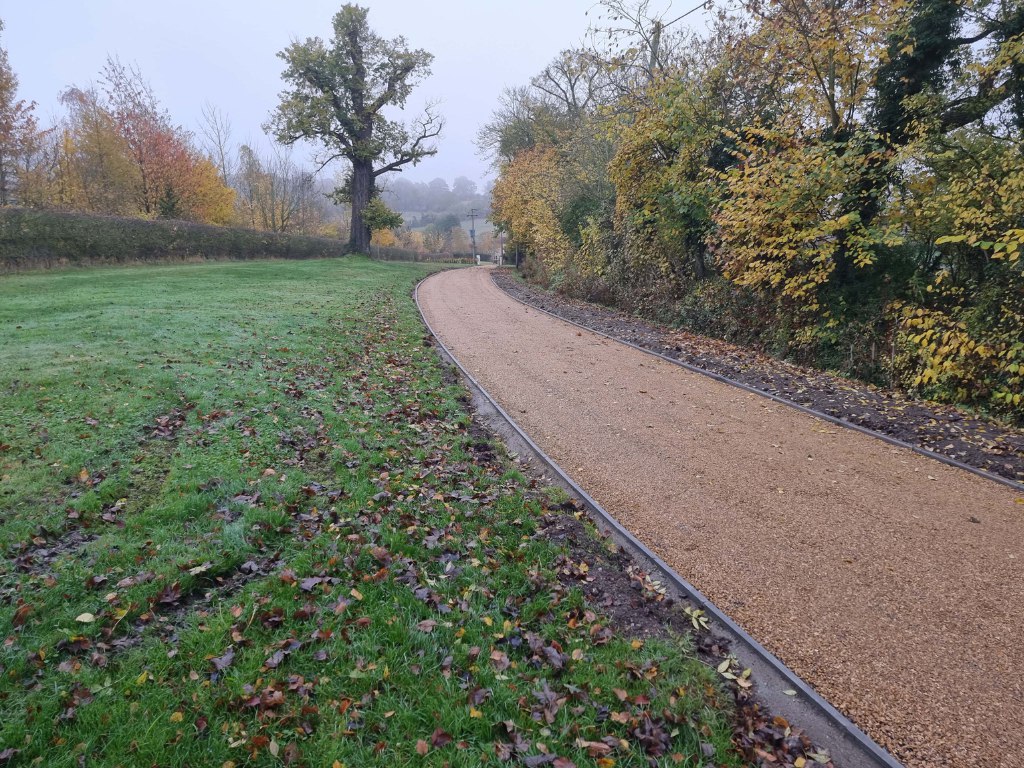
What Can Cause a New Driveway to Look Uneven?
A newly installed driveway should provide a stable, well-finished surface that complements the property and supports regular vehicle use. If it appears uneven, however, the cause may range from intentional drainage gradients and natural surface variation to problems with preparation, compaction or installation.
Understanding the difference between a functional slope and an actual defect is important. Some variation is necessary to manage rainwater, but dips, ridges, sunken areas and inconsistent finishes may require professional assessment.
Why a Newly Installed Driveway May Appear Uneven
Every driveway is influenced by its ground conditions, drainage requirements, materials and installation method. A reliable finish depends on each construction stage being completed correctly, from excavation through to the final surface.
The Driveway May Have an Intentional Gradient
A completely level driveway is not always desirable. The surface normally requires a carefully planned fall so that rainwater can drain away rather than collect in puddles.
This gradient may make one side appear slightly higher than another, particularly where the driveway connects with a pavement, garage, path or existing drainage point. A properly formed fall should be smooth and consistent. It should not create abrupt dips, raised sections or areas where water becomes trapped.
Inadequate Ground Preparation
The finished driveway is only as dependable as the ground beneath it. Before installation, unsuitable material should be removed and the area prepared to the correct depth.
If soft ground, organic matter or loose soil remains beneath the driveway, certain sections may settle more than others. This can result in depressions, movement or changes in level soon after installation.
Ground preparation should account for:
- Existing soil conditions
- The intended use of the driveway
- Expected vehicle movements
- Drainage requirements
- The chosen surfacing material
- Connections with surrounding features
A site-specific approach is essential because the same preparation method will not be suitable for every property.
An Inconsistent Sub-Base
The sub-base distributes vehicle loads and provides a stable foundation for the surface above. If it varies in depth or is spread unevenly, the finished driveway may develop weak or sunken areas.
Low sections can form where insufficient sub-base material has been used. Raised or irregular areas may occur when the material has not been levelled correctly before compaction.
Problems within the sub-base are particularly important because surface-only repairs may not provide a lasting solution if the underlying foundation remains unstable.
Insufficient or Uneven Compaction
Compaction removes air spaces and binds the supporting material into a firm layer. If some sections receive less compaction than others, they may settle once vehicles begin using the driveway.
Uneven compaction can lead to:
- Shallow depressions
- Wheel-track settlement
- Movement around turning areas
- Cracking or surface separation
- Changes in the intended drainage fall
Edges, corners and areas around drainage features require particular attention because they can be more difficult to compact evenly.
Variations in the Surface Material
Different driveway materials have their own visual characteristics. Tarmac may show slight texture variations, block paving contains individual units and joints, while resin surfaces use natural aggregate that can vary subtly in colour and appearance.
Minor variation does not necessarily mean the driveway has been installed incorrectly. Changes in light, moisture and viewing angle can also make a uniform surface appear patchy or uneven.
More concerning signs include noticeable ridges, loose materials, rocking blocks, pronounced hollows or abrupt changes in height. These may indicate an installation or foundation issue rather than a normal characteristic of the surface.
Poor Control of Installation Levels
Accurate levels must be maintained throughout the driveway, especially where it meets entrances, paths, walls, drainage channels and other hard surfaces.
If the levels are not checked carefully during installation, the completed driveway may contain high points or dips. These irregularities can affect appearance, vehicle access and water movement.
Good planning establishes the required finished levels before work begins. The depth of each underlying layer can then be calculated around those measurements.
Weak or Unsupported Edges
Driveway edges help contain the surface and prevent sideways movement. Where they are poorly supported, materials may begin to spread, crumble or sink.
Vehicles passing close to an unrestrained edge can place additional pressure on the surface. Over time, this may create visible changes in level and affect adjoining sections. Suitable edge restraints and a properly prepared foundation help the driveway retain its intended shape.
Early Settlement and Drainage Problems
Small amounts of settlement can occur as materials stabilise, but noticeable movement should not be dismissed. If an area continues to sink or begins holding water, the cause should be investigated.
Standing water often highlights unevenness that is difficult to see when the driveway is dry. Persistent puddles may indicate an incorrect fall, local depression, blocked drainage point or movement within the foundation.
Why Professional Assessment Matters
The correct response depends on whether the uneven appearance is superficial or linked to the driveway’s construction. Adding more surface material may temporarily disguise a dip without resolving an unstable sub-base.
A professional assessment should examine the surface, levels, edges, drainage and areas of vehicle loading. It should also establish whether the problem is isolated or likely to affect other parts of the driveway.
Conclusion
A new driveway may look uneven because of its designed drainage gradient, natural material variation or the way light falls across the surface. However, visible dips, ridges, settlement and standing water can indicate inadequate preparation, inconsistent compaction, weak edges or poorly controlled levels.
Identifying the cause is essential before deciding what work is appropriate. Cottenham Driveways can assess uneven driveway surfaces in Cottenham, Cambridgeshire, and recommend a suitable solution based on the condition of the surface and its foundation. Contact the team if you are concerned about the finish or performance of your driveway.
Call us on: 01954 774 563
Click here to find out more about Cottenham Driveways
Click here to complete our contact form and see how we can help with your driveway needs.